
How to Identify the Right Processes for Automation
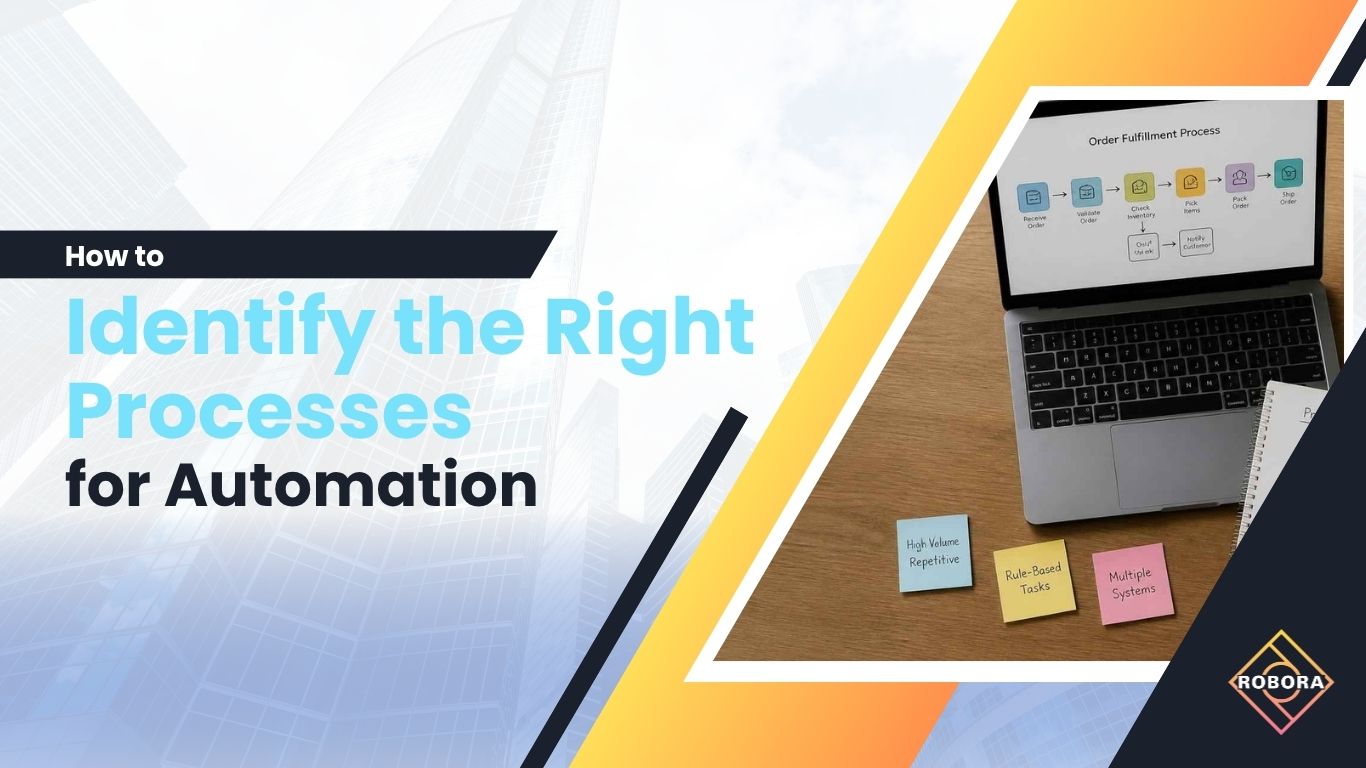
Identifying the right processes for automation is the first step, and often the most poorly handled one, in any successful RPA or Agentic AI project — not every repetitive activity justifies an investment. Many companies buy automation solutions without first doing this essential diagnostic exercise, and the result is weak ROI and frustrated teams. In this article, the ROBORA team shows you exactly how to do this analysis correctly, what separates a good candidate from a poor one, and how to move from classic RPA to Agentic AI where it makes sense.
Why Correctly Identifying Processes Matters
Before implementing any software robot or AI agent, you need to answer a simple question: does this process actually deserve to be automated? A successful automation initiative starts with understanding the workload, the frequency of tasks, and the impact on the team. Without this analysis, you risk automating a rare exception instead of a truly costly, repetitive workflow.
The 6 Signs a Process Is Ready for Automation
A process is a good candidate among the right processes for automation if it checks most of the boxes below:
- High repetitiveness – it runs daily or multiple times a week, following the same steps.
- Clear rules, not exceptions – the process follows well-defined logic (if X, then Y), not subjective judgment every time.
- Large volume of structured data – invoices, orders, Excel reports, bank statements, forms.
- High time cost, low added value – people spend hours copying data, reconciling records, or manually entering information into systems.
- Prone to human error – typos, omissions, delays caused by fatigue or volume.
- Involves multiple disconnected systems – ERP, CRM, Excel, email — data moving manually between applications that don’t natively communicate.
If a process checks 4-5 of these criteria, it’s a solid candidate for RPA. If it also involves contextual decisions or natural language interpretation, you’re already looking at a case for Agentic AI.
RPA vs. Agentic AI: How to Choose the Right Fit

A common mistake is treating all processes suitable for automation as identical. In reality, there’s a clear complexity gap:
RPA (Robotic Process Automation) works well for rule-based processes: extracting data from invoices, updating databases, generating periodic reports, migrating information between systems. The robot follows exactly the steps you’ve defined, without “thinking.”
Agentic AI comes in where the process requires interpretation, context, or adaptive decisions: triaging emails and classifying customer requests, analyzing unstructured documents, generating personalized responses, orchestrating multiple steps that depend on prior outcomes. An AI agent doesn’t just execute — it evaluates the situation and chooses the next step.
Many companies get the best results by combining both: RPA for mechanical execution, Agentic AI for judgment and adaptation. This is exactly the type of hybrid architecture we build at ROBORA for clients across different industries.
Practical Checklist: How to Run the Analysis Step by Step
- Map existing processes. Talk to operational teams and list all repetitive activities, regardless of department (finance, HR, sales, support).
- Measure time and frequency. Note how many hours per week each process consumes and how many people are involved.
- Assess decision complexity. Is the process 100% rule-based, or does it involve interpretation of context? This determines whether you go with RPA, Agentic AI, or a combination.
- Calculate the cost of errors. How much does a human mistake cost in that process — correction time, compliance risks, customer dissatisfaction?
- Prioritize by potential ROI. Pick the top 2-3 processes with the highest volume and the highest error cost — these are your “quick wins” for a pilot automation project.
- Test with a controlled pilot. Implement automation on a single workflow, measure real results, then scale.
A Concrete Example
An accounting team that receives dozens of invoices daily in different formats (PDF, email, scan) and enters them manually into an ERP is a classic case. RPA can automatically extract invoice data and validate it against fixed rules (amount, VAT, vendor). If an unclear invoice or an unusual format shows up, an AI agent can step in, interpret the document, and decide whether to route it for human approval or process it automatically. The result: hours recovered weekly and errors nearly eliminated.
Frequently Asked Questions
What exactly does process automation mean? Process automation is the use of software technologies (RPA, AI agents) to automatically execute repetitive tasks that normally require human intervention, reducing time, costs, and errors.
How much does implementing RPA automation cost? The cost depends on the complexity of the process, the number of systems involved, and the data volume. As a rule, the investment pays for itself within a few months through time savings and reduced errors.
Can any process be automated? No. Highly variable processes that constantly depend on complex human judgment or interpersonal relationships are poor candidates for full automation — but they can partially benefit from Agentic AI for their repetitive components.
How long does an automation project take to implement? An RPA pilot on a single process can be delivered within a few weeks. More complex projects involving Agentic AI and integration across multiple systems take 1 to 3 months, depending on scope.
Conclusion: From Identification to Implementation
A successful strategy for identifying the right processes for automation doesn’t start with technology — it starts with an honest analysis of existing workflows. Once the right processes are identified, choosing between RPA, Agentic AI, or a hybrid combination becomes much clearer, along with the expected impact on your team and costs.
At ROBORA, we help companies go through exactly this process: from the initial workflow analysis to implementing custom RPA and Agentic AI solutions, integrated with existing systems (ERP, CRM, BI). If you want to find out which of your processes are ready for automation, schedule a conversation with the ROBORA team and get a free assessment of your automation potential.